
Two GPUs Aren't the Bottleneck Anymore, Your Breaker Panel Is
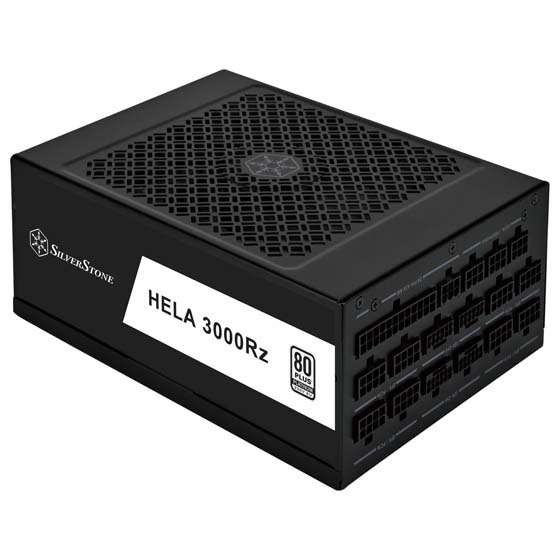
For most of the last decade, the ceiling on a power supply was set by the case it had to fit in and the GPU it had to feed. Thermaltake and SilverStone just moved the ceiling somewhere else entirely: the electrical panel in your wall. Both companies put 3,000W-plus ATX 3.1 units on sale on September 1, 2026, the AX 3200W and the HELA 3000Rz, and both require a dedicated 240V circuit. A standard 120V North American wall outlet cannot run either one. That is not a marketing footnote, it is a hard electrical limit, and it says a lot about where PSU engineering is heading now that a single workstation can plausibly host four flagship GPUs.
The Numbers: 3200W and 3000W Out of a Single Chassis
The AX 3200W is rated for 3200W of continuous output at 45°C, carries an 80 PLUS 230V EU Internal Platinum certification, and Thermaltake claims up to 94% efficiency at typical load. It runs a single +12V rail rated at 266.6A, good for 3199.2W on that rail alone, which tells you almost the entire unit's output is riding on one rail rather than being split. SilverStone's HELA 3000Rz sits just under it at 3000W continuous, also on a single +12V rail, this one rated at 250A, with 80 PLUS Platinum switching efficiency at 230V AC. Both ship with four native 12V-2×6 connectors as standard, not as an add-on cable kit, and both are certified to the ATX 3.1 and PCIe 5.1 specifications. Pricing lands at $654 for the Thermaltake unit and $819.99 for the SilverStone, and both are shipping now rather than sitting in a CES teaser slide.
Why 240V, and Why It Matters
Thermaltake specifies a 230 to 240V input range. SilverStone's is wider, 180 to 264V AC, but still well above what comes out of a standard US wall socket. Run the math on a 120V circuit and the current draw needed to deliver 3,000W-plus output, after AC-DC conversion losses, would push well past what a 15A or even 20A residential breaker is rated to carry continuously. Stepping the input voltage up to 230-240V roughly halves the amperage needed for the same wattage, which is why data centers and most of the world outside North America run higher line voltages as a matter of course. For a US builder, that means one of these PSUs is only usable with a dedicated 240V circuit, the kind normally reserved for a dryer or a range, not a home office. This is the same electrical-code wall that server rooms have been designing around for years, now showing up in a DIY PC part.
Four Cables, One Rail, and the Thermal Load Nobody Talks About
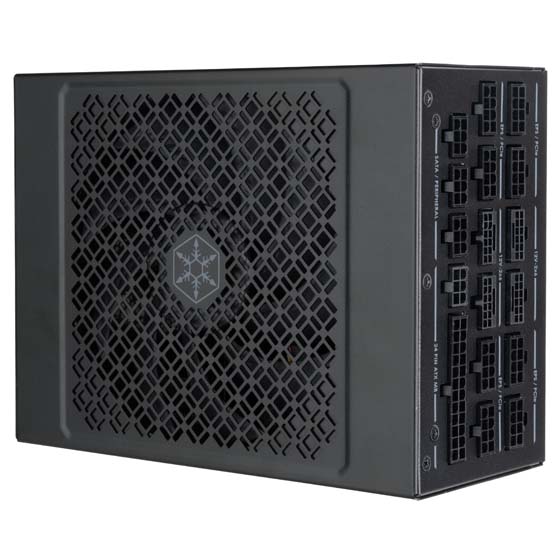
Putting four 12V-2×6 connectors on a single rail concentrates a lot of current through a small number of contact points, and that has real thermal consequences inside the PSU housing regardless of how good the external cooling is. The 12V-2×6 connector already carries a reputation problem from the RTX 4090 melting incidents, and while the redesigned sense-pin geometry has cut down on partial-seating failures, a rail pushing 250 to 266A total still needs every one of those four connectors making full, low-resistance contact. Thermaltake's answer is a dual-colour design meant to give a visual confirmation of full seating, plus Japanese 105°C electrolytic capacitors that buy thermal headroom on the primary side. None of that replaces good case airflow. A 3,000W-plus supply dissipates a genuinely non-trivial amount of waste heat even at 94% efficiency, and if you're stacking four GPUs on top of it, exhaust path planning stops being optional.
Efficiency at This Scale Isn't Optional
At 3200W continuous, a one-point swing in efficiency is the difference between roughly 190W and 220W of waste heat dumped into the case at full load, purely from conversion losses. That is why both units chase 80 PLUS Platinum rather than settling for Gold, and why the efficiency curve at partial load matters more here than it does on a 750W unit that rarely sees more than 40% of its rated output. A four-GPU AI workstation idling most GPUs and spiking one under inference load will spend most of its life well below rated capacity, and a PSU that only hits its best efficiency near full load is going to run warmer and louder than one with a flat curve across the range.
Who Actually Needs This
This is not a gaming PSU with a marketing number attached. Four native 12V-2×6 connectors on one rail is built for local AI inference boxes and multi-GPU render rigs where every card is expected to pull real power simultaneously, not a single RTX 5090 with three spare connectors doing nothing. If your build has one GPU, a 1000 to 1200W Platinum unit still covers you with headroom to spare, and it runs on the outlet you already have. But for anyone assembling a genuine multi-GPU workstation in 2026, the electrician's invoice for a 240V circuit is now a line item in the build budget, right next to the PSU itself.
Loading comments...