
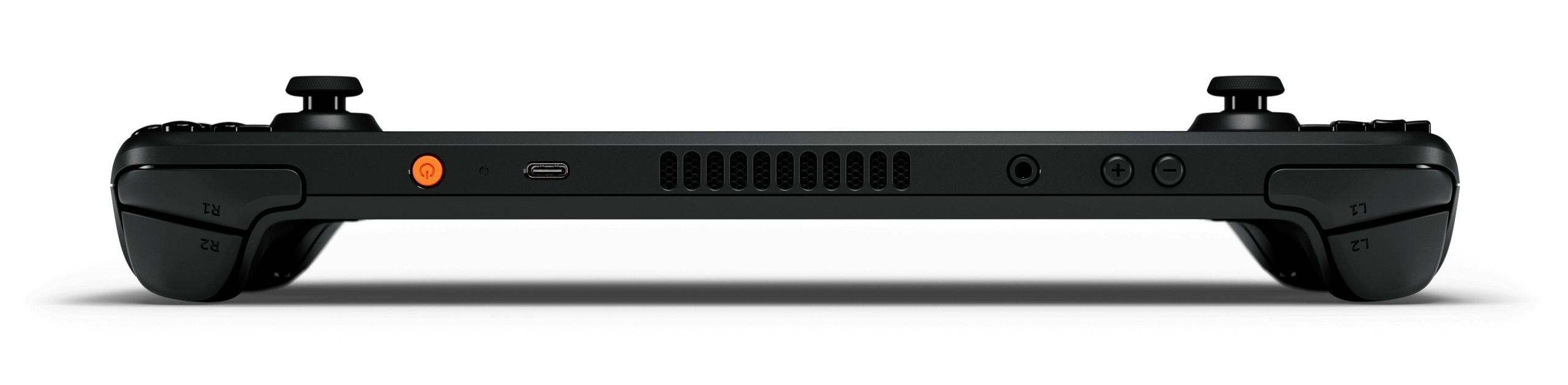
Nobody Said 2028, Nobody Said 2029, Everybody's Still Guessing
If you've been refreshing NeoGAF and r/SteamDeck hoping for a Steam Deck 2 reveal, I've got a status update but not the one you want: Valve is still working on it, still won't say when, and the same component shortage wrecking handheld pricing across the industry is now old enough to be a stated production risk for the console you can already buy.
Valve engineer Pierre-Loup Griffais put it plainly when asked about a successor: "We're hard at work on it." He connected it directly to the company's hardware lineage, from the original Steam Controller through Steam Machines to the original Deck, framing SD2 as the next point on that line rather than a rushed refresh. That's the good news. The less good news is the bar he described for shipping it.
The Performance Bar Nobody's SoC Clears Yet
Griffais was specific about what won't cut it: "We're not interested in getting to a point where it's 20 or 30 or even 50% more performance at the same battery life." That's a much higher target than anything AMD, Intel, or Qualcomm currently ships in an 8-inch form factor, and it tells you why Valve keeps declining to commit to a date. The company is reportedly working backward from silicon roadmaps rather than picking a launch year and shipping whatever chip is ready by then, which is exactly the opposite of how MSI and Lenovo have been operating this year.
As a modder who's spent two years TDP-tuning every Z1 and Z2 handheld I can get my hands on, I get why Valve is holding the line. A Steam Deck 2 that only nets you 30% more frames per watt over the OLED model isn't worth fragmenting the install base for. Compatibility layers, custom firmware, and Proton all benefit from a stable target; a half-step upgrade just gives ROMs and shaders one more configuration to choke on.
The Memory Crisis Isn't Just a Pricing Story Anymore
Here's the part that should worry current Deck owners more than the sequel timeline. Asked about ongoing stock shortages on the original Steam Deck, Griffais didn't dodge it: "There's a lot of considerations right now with respect to shipping being difficult, and also memory shortages." He added that Valve spreads risk across multiple suppliers, but conceded "there's only so much that we can do" given a DRAM crunch hitting automotive and PC manufacturing alike.
That crunch has already reshaped the rest of the handheld market this year. Lenovo hiked the Legion Go S from $899 to as much as $1,579 for the Z1 Extreme configuration, a 76% jump on what was originally pitched as a budget device. The Legion Go 2 followed with the Z2 Extreme model climbing from $1,349 to $1,999.99, and the 2TB configuration now runs close to $3,000. MSI's response was to just start high: the Claw 8 EX AI+ launched in June at $1,799 with Intel's Arc G3 Extreme, and MSI's own marketing rep admitted there's "much room for another price hike" before the year is out.
ASUS has been the outlier, holding the ROG Ally X at $999.99 with no increase announced, which is the main reason it's currently the sanest buy in the segment if you need a Windows handheld today. Between the two extremes sits the reason this all matters for a Steam Deck sequel: if DRAM stays this expensive, Valve either eats the margin, passes it on, or waits the shortage out. Given the performance bar Griffais described, waiting looks like the plan.
What This Means If You're Buying Today
Independent leaker Kepler2, who has a solid track record on AMD APU roadmaps, said back in April that Valve's internal target was 2028, with the RAM and NAND situation potentially pushing it further. Nothing since has moved that needle. Valve hasn't confirmed a name, chip, display spec, or price, and as of this month there's no indication that changes before 2027 at the earliest.
My practical advice hasn't shifted: if you need a handheld now, the Steam Deck OLED at $789 for the 512GB model is still the reference point for emulation compatibility and battery life per game, and it's not caught in the same pricing spiral as the Windows-based competition because Valve controls the whole stack. If you're chasing a 30-platform emulation library like mine, none of the memory-shortage drama changes what runs well on SteamOS today. Buy for what exists, not for what Kepler2 heard on a forum. If it fits in my hands and runs games, I'm interested, but I'm not paying Legion Go 2 money for a maybe.
Loading comments...