
Capacity Is Being Committed Years Ahead
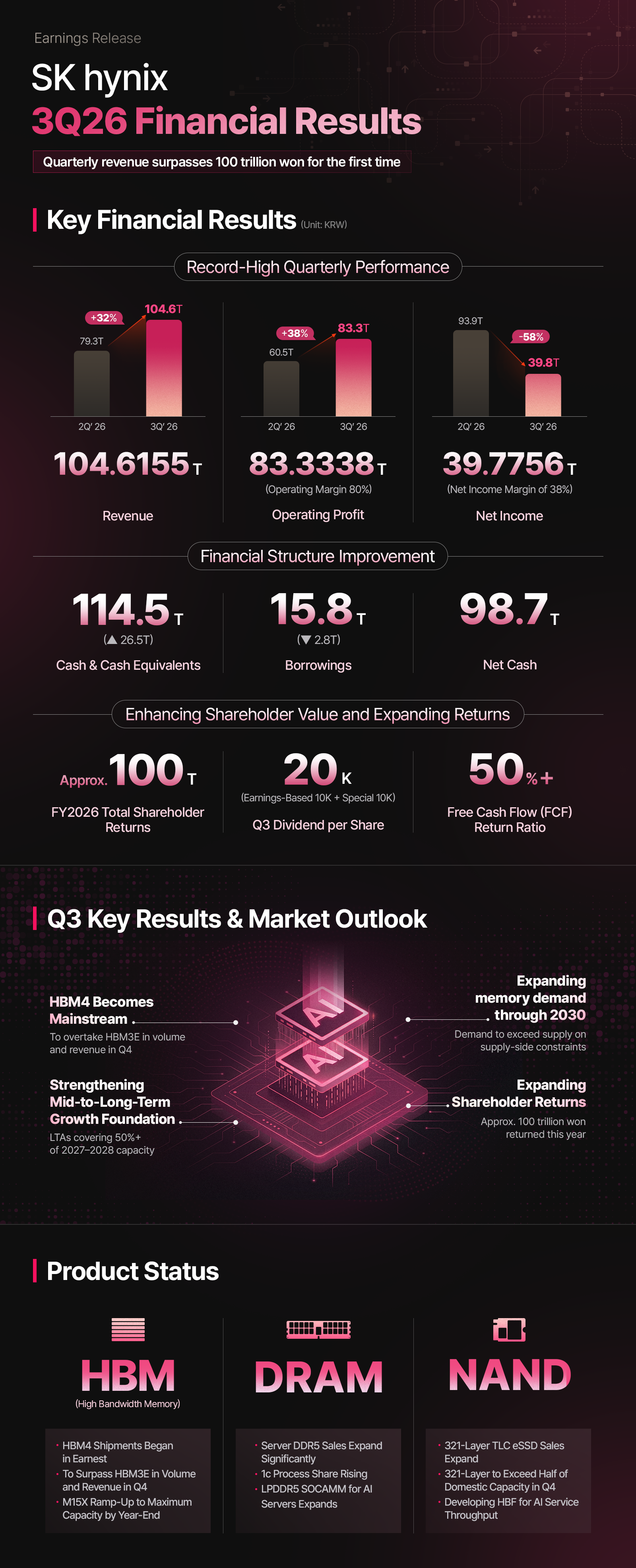
SK hynix expects memory demand to exceed supply through 2030, according to its [October 28 earnings release](https://news.skhynix.com/en/q3-2026-business-results/). Agreements with 14 customers already cover more than half its total production capacity for 2027 and 2028. That is a supplier forecast, not a guarantee of four more years of rising desktop RAM prices.
Server DRAM Sets the Direction
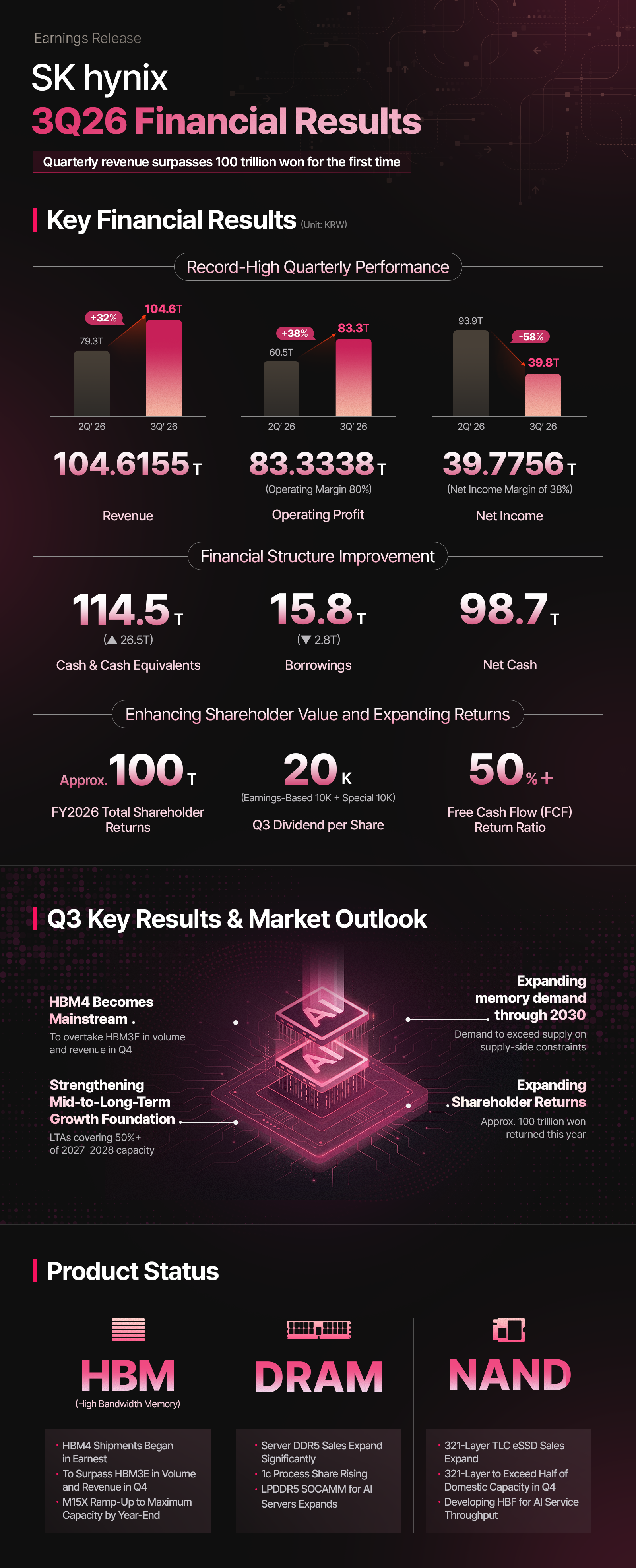
The company is expanding its 1c DRAM process and prioritizing server DDR5 and LPDDR5 SOCAMM. It expects HBM4 to overtake HBM3E in both shipment volume and revenue during Q4. Its shortage explanation centers on manufacturing complexity and the time needed to build facilities.
My reading: a capacity expansion headline alone is insufficient evidence that affordable desktop DIMMs are coming. The resulting product mix matters. This release supplies no consumer-kit allocation figures or retail price forecast.
Profits Measure the Pressure, Not DIMM Performance
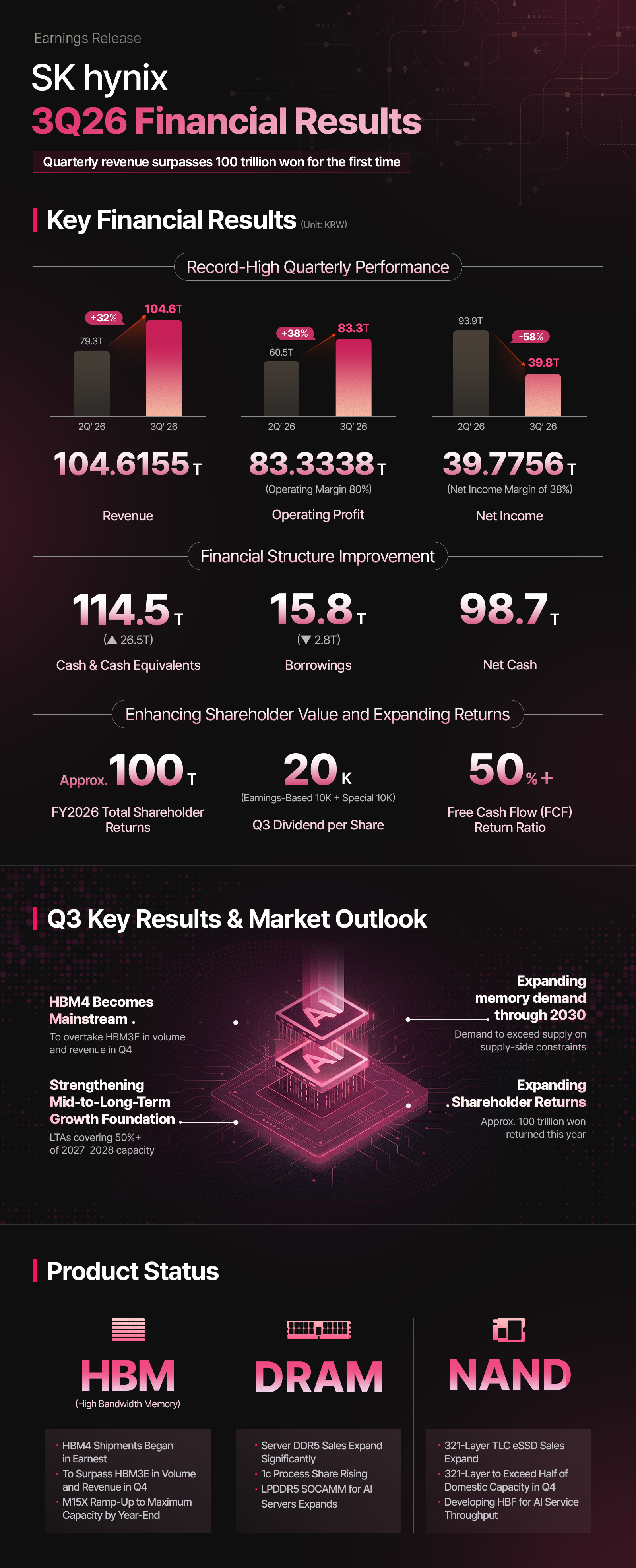
Quarterly revenue reached 104.6155 trillion won, against 79.3187 trillion in Q2. The chart below reproduces company-reported revenue, including its prior-year comparison. These consolidated figures cover more than DRAM and are not a RAM price index. The release identifies its financial results as preliminary.
Data Integrity Still Comes First
For a storage server, I would preserve the validated memory configuration rather than chase an untested bargain. DRAM has no SSD-style terabytes-written endurance rating, so borrowing NAND endurance language tells you little about DIMM reliability. Memory stability and supported error correction deserve attention before tuning performance.
Keep a separate, versioned backup and test restoration before a major hardware change. A redundant disk array cannot undo every corrupted write or administrative mistake. No RAID is a substitute for backups.
Loading comments...