
The Number on the Box vs. the Number in the Seat
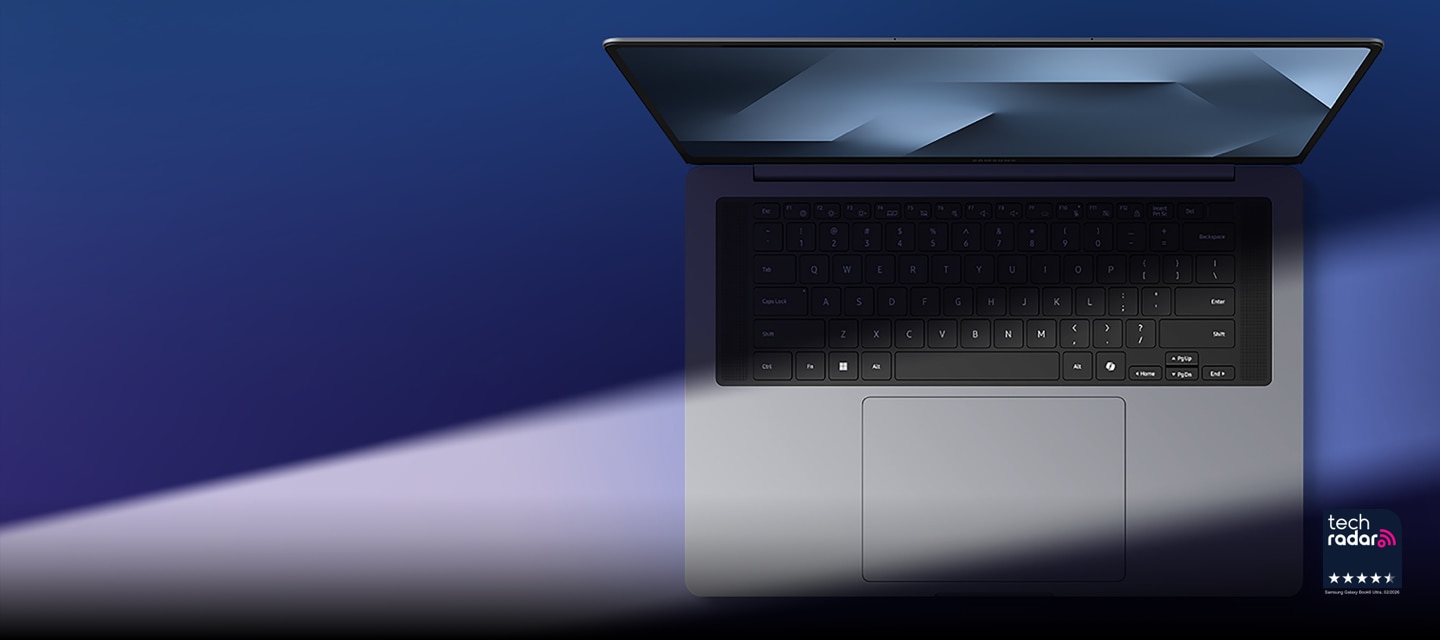
Every laptop maker rounds its battery claim toward the best possible outcome: dimmed screen, airplane mode, nobody touching the keyboard. So when Samsung printed "up to 30 hours" on the Galaxy Book6 Ultra spec sheet, I filed it next to every other optimistic number I've seen on a laptop box over fifteen years of testing these things on actual flights. PCWorld ran its standard rundown test on the machine anyway, and the result is worth talking about because it lands closer to the marketing claim than almost anything else on the market right now.
The test: airplane mode, screen fixed at roughly 250 nits, a 4K file looping with earbuds plugged in, repeated at least twice for consistency. That's a lighter workload than what I actually do on a plane, which is usually a mix of writing, Slack, and intermittent video, but it's a fair, repeatable baseline that lets you compare machines apples to apples. The Book6 Ultra came in at 25.7 hours, averaged across 1,543 minutes of runtime.
25.7 Hours Is Not a Letdown
Let's be clear about what that gap means. Samsung oversold by about four and a half hours, roughly 15%, which is a normal amount of marketing padding, not a scandal. What actually matters is the number PCWorld measured on its own, and 25.7 hours is a genuinely excellent result for a 16-inch machine that's also carrying an Nvidia RTX 5070 Laptop GPU. For comparison, PCWorld's identical rundown test clocked the Lunar Lake-powered Asus ZenBook 14 OLED at 21 hours when that chip launched. The Book6 Ultra beats that by more than four and a half hours while also carrying a discrete GPU and driving a higher-resolution touch panel.
That combination is the actual story here: Intel's Panther Lake architecture is letting Samsung ship a machine with discrete Nvidia graphics and a 120Hz AMOLED panel that still runs longer than most ultrabooks with integrated graphics and 60Hz LCDs. A separate PCWorld test that streams Netflix instead of looping a local video file points the same direction: a Panther Lake laptop ran 16 hours 33 minutes, ahead of a Snapdragon X machine at 15 hours 23 minutes, an older Lunar Lake laptop at 14 hours 19 minutes, and a Ryzen AI 300 machine at 11 hours 57 minutes. Different test, same conclusion. The old rule, that you sacrifice runtime for GPU performance in a thin chassis, is quietly going away.
Why the Gap Between Claim and Reality Even Matters
I've stopped trusting any "up to" number without a description of the test behind it, and you should too. A 30-hour claim measured at minimum brightness with the radio off tells you almost nothing about what happens when you're on hotel WiFi with Zoom running and the screen at half brightness because the conference room lighting is bad. The useful comparison isn't Samsung's number against PCWorld's number, it's PCWorld's number against every other laptop PCWorld has tested with the identical methodology. On that scale, 25.7 hours puts the Book6 Ultra near the top of anything currently shipping, discrete GPU or not.
What This Means If You're Buying
At $2,449.99 for the Ultra configuration with the RTX 5060 and 1TB of storage, this isn't a budget purchase, and Samsung's own U.S. pricing has drawn criticism for undercutting the value case against a comparably specced MacBook Pro. But if your actual constraint is "the battery needs to survive a full workday plus the flight home," the underlying hardware here delivers even after you discount the marketing number. The fast charging spec, 63% in 30 minutes, matters just as much as total capacity when you're working out of an airport lounge with one outlet and forty minutes before boarding.
The bigger takeaway is about Panther Lake as a platform. This is the second real-world test I've seen this quarter where an Intel Core Ultra 300-series chip posts battery numbers that would have been unbelievable on x86 hardware two years ago, and it's happening in machines that also pack real discrete graphics, not just integrated silicon tuned purely for idle power draw. If that holds across more models this fall, the old rule of thumb about trading battery life for GPU horsepower is quietly going away.
Loading comments...