
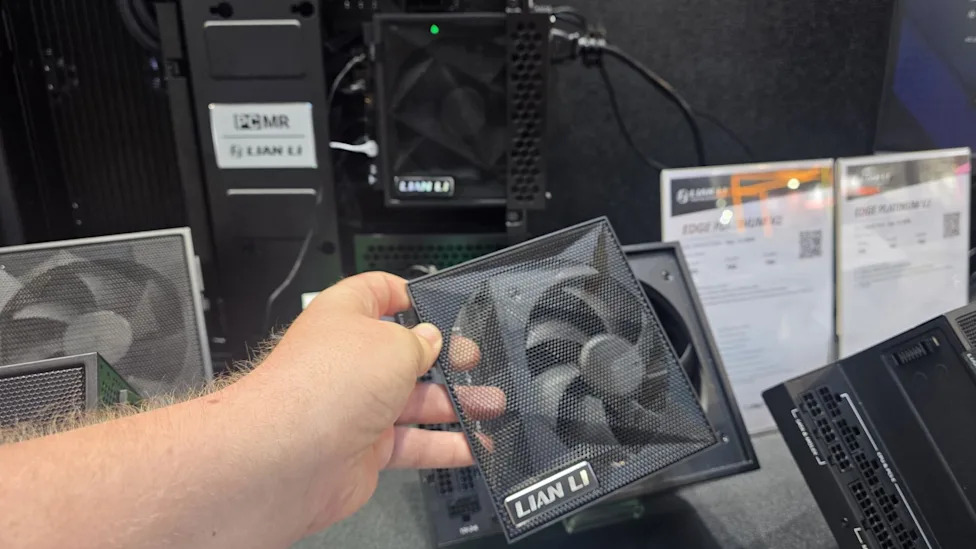
A Dust Filter That Actually Tells You Something
Every PSU with an intake fan pulls dust in with the air it needs, no way around it, that's just how a fan works. What almost no PSU does is tell you when that dust has built up enough to matter. Lian Li's Edge Platinum V2, launching September 11 in 1000W, 1200W and 1350W flavors, finally does. An LED on the side of the unit sits green under normal operation and flips to red once the fan has logged 360 hours of runtime, which is Lian Li's proxy for "the filter is probably due for a clean." Pop the magnetic filter off, clear it, and the cycle resets.
It's a small feature and I like it more than I expected to. Runtime-based reminders aren't a perfect substitute for an actual differential pressure sensor across the filter, which would tell you real restriction rather than elapsed hours, but that hardware costs money and adds a failure point inside a PSU where you really don't want extra electronics. A timer tied to fan hours is a reasonable compromise: cheap, passive, and it nudges people who would otherwise never open the case to actually check.
Airflow In, Dust In: Why This Matters
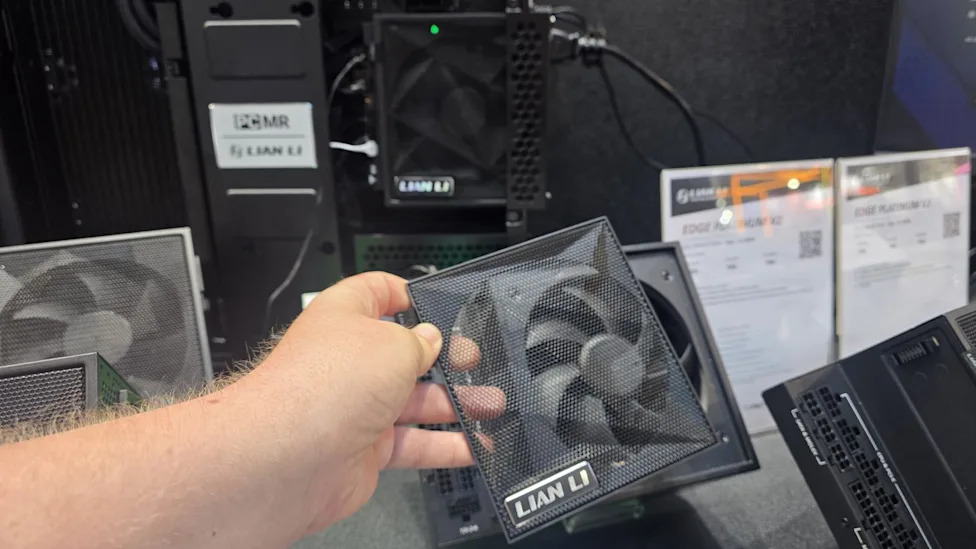
A clogged PSU intake doesn't fail loudly, it fails as a slow creep. Restricted intake area raises static pressure the fan has to fight, so the fan ramps up rpm to hold the same volumetric flow, which raises noise. If the fan can't compensate fast enough, internal component temperatures climb instead, which pushes the fan curve even harder, and now you've got a PSU that's louder and hotter than the day you bought it for no reason you can see from the outside. Most people never connect a slowly rising noise floor to a dust cake on a filter they forgot exists. That's the actual problem this LED solves: not filter cleanliness for its own sake, but breaking the feedback loop between the thing that's wrong and the awareness that anything is wrong at all.
The Hub Nobody Asked For, But Should Have
The more interesting engineering decision is what Lian Li did with the case-side wiring. The Edge Platinum V2 keeps a magnetically-attached internal hub, a 4-pin fan hub with six ports and a USB 2.0 hub with four connectors, that snaps onto pins near the PSU shroud. It's aimed squarely at Lian Li's own dual-chamber cases, where the PSU compartment sits right next to the fan and front-panel USB wiring, and it means fewer individual cables threading through the shroud cutout. Fewer cables through one opening means less obstruction at exactly the spot where cases funnel air between chambers, and less obstruction there is a bigger deal for case airflow than most builders give it credit for. The tradeoff, and reviewers who've had early hands-on time have flagged this, is that running both fan and power cabling through a shared area invites its own clutter if you're not deliberate about routing.
80 PLUS Platinum, Not Titanium, and That's Fine
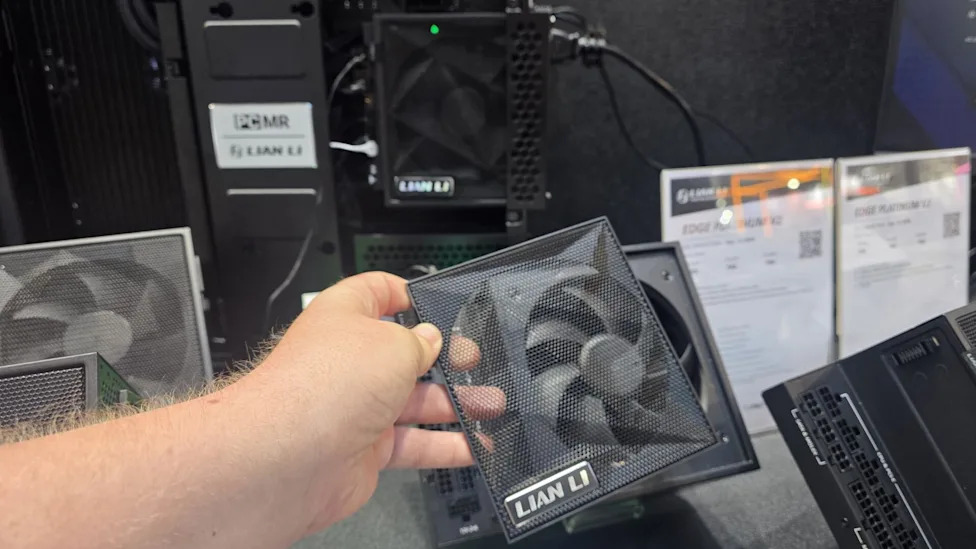
Lian Li held the Edge Platinum V2 at 80 PLUS Platinum rather than chasing a Titanium badge, and the certification math explains why that's a sensible stopping point for a mainstream ATX unit. Platinum's 115V internal non-redundant tier requires 90% efficiency at 20% load, 92% at 50%, and 89% at 100%, a curve that already covers the load range almost every gaming or workstation build actually lives in. Titanium adds a 10%-load requirement on top and pushes the mid-load bar higher, which matters more for servers idling most of the day than for a desktop that spends its life bouncing between 20% and 60% load. Chasing Titanium buys you a few tenths of a percent of extra efficiency in a range this PSU rarely operates in, at a real cost premium. Platinum is the right target here.
What's Missing: A Price Tag
Lian Li hasn't announced pricing for the Edge Platinum V2 lineup, which is the one gap keeping this from being a slam-dunk recommendation sight unseen. For reference, the adjacent Edge Gold V2 line is landing mid-Q3 2026 at $99.99 for 850W and $129.99 for 1000W, so expect the Platinum V2's higher certification tier and the added dust-sensing electronics to sit above that. We haven't had a unit on the bench yet, so take the fan noise and thermal behavior as unverified until independent load testing and acoustic measurement confirms it under real 20/50/100% load steps. Airflow is not optional, it's physics, and neither is verifying a manufacturer's efficiency curve with your own equipment before you trust it.
Loading comments...