
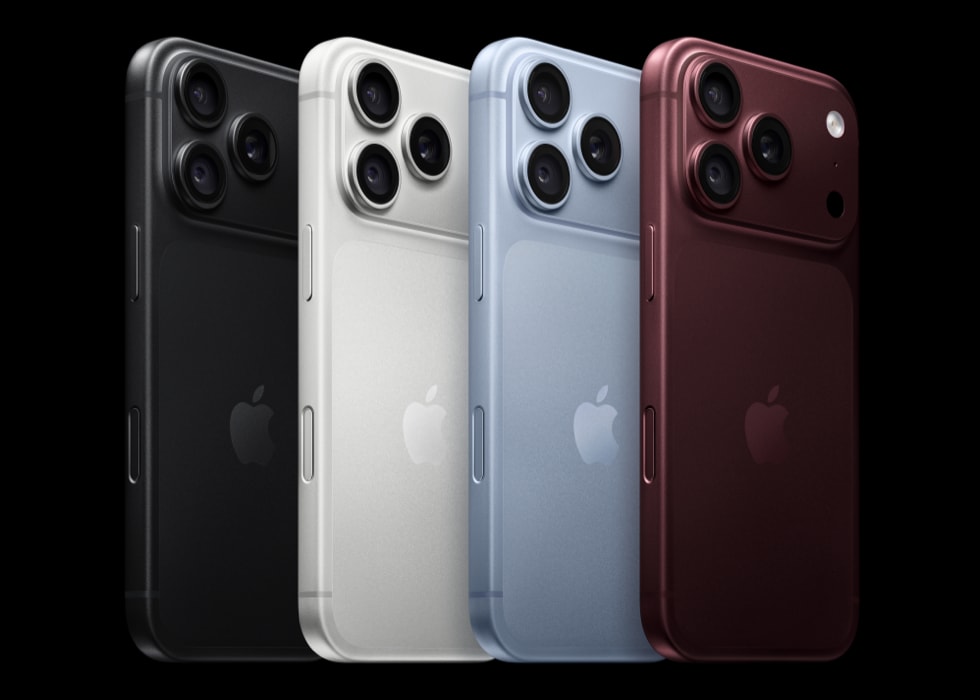
A Camera Change You Can Actually Feel
I've used a new phone every couple of weeks for years now, and most "biggest camera upgrade ever" claims turn out to be a slightly better computational pipeline stapled to the same hardware. The iPhone 18 Pro is different. Apple put a real, mechanical variable aperture on the 48MP Fusion main camera: six laser-cut blades that physically move between f/1.48, f/1.8, f/2.8, and f/4.0. That's the first time any iPhone has had a moving aperture, and it's not a gimmick buried in a pro mode nobody opens.
Wide open at f/1.48, background separation on portraits looks closer to what you'd get from a dedicated mirrorless with a fast prime than anything a phone camera has produced through software blur alone. Stop it down to f/4.0 for a landscape or a product shot and the extra depth of field holds edge to edge without the usual smeared-corner look phone lenses get when they try to fake a small aperture digitally. Manual controls for aperture, shutter speed, and white balance are all exposed directly, which matters if you actually shoot RAW on your phone instead of just pointing and tapping.
Night Shots Got Quietly Better
The unglamorous but more consistently useful change is what the wider aperture does to low light. In side-by-side night shots against the iPhone 17 Pro at matched settings, the 18 Pro pulled ISO 10,000 where the 17 Pro needed ISO 12,500 for the same exposure. That's a real, physical light-gathering advantage, not a noise reduction algorithm working harder. Less ISO means less aggressive noise processing downstream, which means night shots keep more actual texture instead of turning into the smoothed-over watercolor look Night Mode photos have had for years.
Video picked up two features I didn't expect to care about this much: Audio Mix can now isolate music out of a clip after the fact, and Cinematic video effects apply retroactively to footage you already shot without them turned on. If you've ever recorded a video, wished you'd flipped on Cinematic mode, and then had to just live with it, this fixes that specific annoyance.
Battery Life Finally Catches Up to How People Actually Use Phones
This is the part that will matter more to most people than the camera. The iPhone 18 Pro is rated for 36 hours of local video playback, up from 33 hours on the iPhone 17 Pro, and the Pro Max jumps to 45 hours versus 39 hours on last year's Max. Apple's playback numbers are a controlled benchmark and always run ahead of real usage, but in my own day-to-day mix of camera use, navigation, and constant messaging, the Pro Max version held on for a day and a half between charges without babying it.
The gain comes from three things stacked together: a physically larger battery (4,288 mAh in the Pro, north of 5,100 mAh in the Max), the more power-efficient 2nm A20 Pro chip, and Apple's own C2 modem replacing the Qualcomm part, which has historically been one of the bigger power draws in any iPhone. None of those individually would be a huge deal. Together they're the difference between anxiously checking your battery percentage at 6pm and not thinking about it at all.
Thermals and Performance: The Vapor Chamber Actually Matters
Apple tripled the surface area of the vapor chamber compared to the iPhone 17 Pro, and it shows up in sustained performance rather than just benchmark charts. The A20 Pro posts 22-27% faster CPU performance and 40-45% faster GPU performance over the previous generation, but the number that actually affects daily use is how long the phone holds peak clocks before throttling. Extended 4K video recording and longer gaming sessions stay smoother for longer before the chip backs off, which is the kind of improvement you only notice by not noticing thermal throttling anymore.
A Smaller Dynamic Island, For a Practical Reason
Apple moved the infrared Face ID camera underneath the display, shrinking the Dynamic Island by about 25%. It's a small cosmetic change, but it also enables three simultaneous Live Activities to display at once instead of cycling through them, which is more useful during flight tracking, a food delivery, and a sports score all competing for the same sliver of screen.
The Price Increase Is Real, and It's Not Small
The base iPhone 18 Pro starts at $1,199 for 256GB, unchanged at the entry tier, but the 1TB configuration jumped $300 over last year's equivalent, landing at $1,799. If you were planning to buy the top storage tier, budget for that jump before you walk into the store.
Should You Upgrade
If you're coming from an iPhone 15 Pro or older, this is an easy yes, the camera and battery gains alone justify it. Coming from an iPhone 17 Pro, it's a harder call: the battery life and thermal improvements are real and you'll feel them daily, but the variable aperture is the kind of feature that changes your photos meaningfully only if you already care about controlling depth of field manually. For me, that's most of the reason to own a camera at all, phone or otherwise. The best phone is the one you actually enjoy using, and for the first time in a few years, Apple gave me a camera I want to reach for on purpose instead of by default.
Loading comments...