
Five Laptops, One Preorder Page
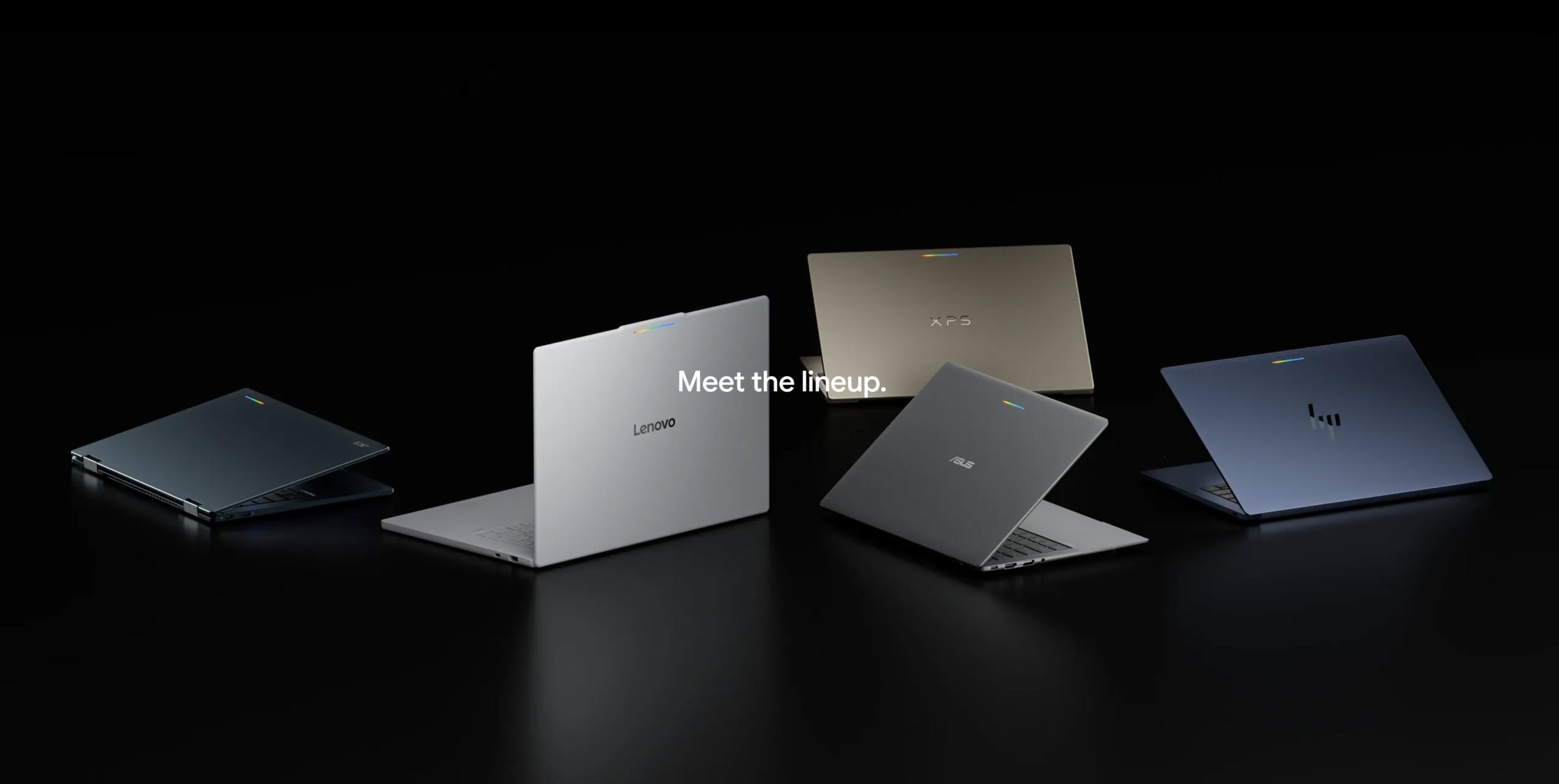
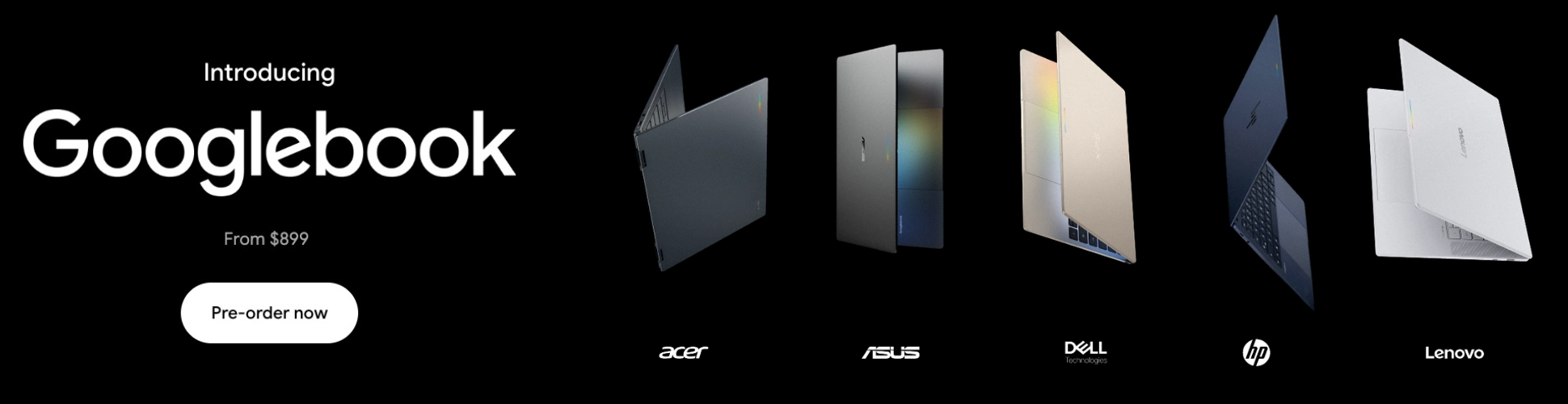
Google's Googlebook platform stopped being a rumor on September 21, when preorders opened at 9am Eastern for five launch machines from Acer, ASUS, Dell, HP, and Lenovo. I have spent a week reading through every spec sheet Google's OEM partners have published, and the short version is this: it is a coherent, well-specced lineup with one number that undersells everything else on the page. Units start shipping October 4 in the US, with the UK, Canada, Ireland, France, Germany, and Australia following a day later.
The pricing spread runs from $899 for the Acer Googlebook 14 up to $1,299 for the ASUS and HP models, with the Dell XPS Googlebook at $999 and the Lenovo Googlebook 15 at $1,099 sitting in between. Every model ships with at least 16GB of RAM, a 256GB to 512GB SSD depending on configuration, a fingerprint sensor, and a 45+ TOPS on-device NPU aimed squarely at running Gemini locally instead of round-tripping to a data center. That last part matters more on a plane with spotty WiFi than Google's marketing deck lets on.
The Chip Split Actually Makes Sense for Travelers
Three of the five launch machines, the Acer, ASUS, and Lenovo, run Intel's new Core Ultra 3 Panther Lake silicon. The Dell and HP go the other way with Qualcomm's Snapdragon X Elite. That is not a marketing accident. If you fly enough to have opinions about gate seating, you already know the ARM-versus-x86 tradeoff on a travel laptop: Snapdragon machines sip power on idle and during video calls, which is most of what a laptop does in a coach seat, while Panther Lake buys back compatibility with x86-only software you still need for client work. Having both options under one brand, at nearly identical price points, is the most sensible thing about this launch. Nobody has to choose a platform before they choose a chip anymore.
Weight and Screen: ASUS Wins the Backpack, Lenovo Wins the Meeting Room
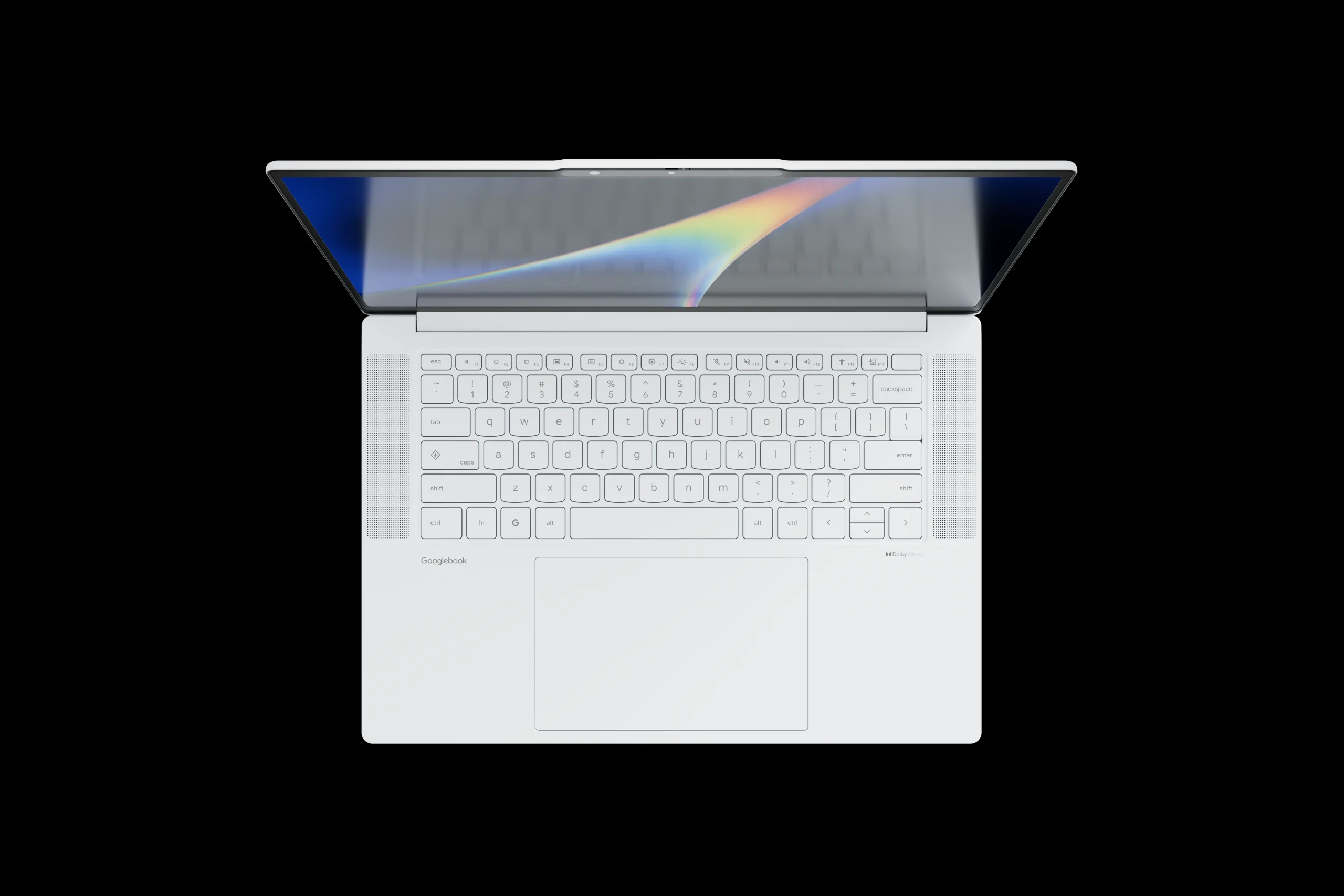
The ASUS Googlebook 14 is the one worth putting in a one-bag travel setup: 2.2 lbs, a 14-inch 3K OLED panel at 500 nits, and a 14mm-thick chassis with a full-glass haptic trackpad. That is genuinely light for a 14-inch machine with a 3K panel, and 500 nits is enough to read outdoors under an airport terminal skylight, though it will not fully beat direct sun the way the 1,100-nit panels on some rival ultraportables do.
At the other end, the Lenovo Googlebook 15 packs a 15.3-inch 2.8K OLED screen with Dolby Atmos speakers into 2.68 lbs, which is a legitimately good weight-to-screen-size ratio if you want a bigger canvas for spreadsheets and don't mind the extra footprint in a bag. The Dell XPS Googlebook takes the opposite approach: a 13.4-inch 2.5K panel in the smallest footprint of the five, machined aluminum, and IR face authentication alongside the fingerprint reader, which is the faster unlock when you are juggling a boarding pass and a coffee at a gate.
On ports, the ASUS model in particular is worth calling out for going against the industry's dongle-everything trend: two Thunderbolt 4 USB-C ports, two USB-A ports, a full HDMI 2.1b output, and a 3.5mm headphone jack. That is a real port selection, not a single USB-C port and an apology. On a laptop aimed at road warriors, that HDMI port alone saves you from carrying an adapter to every hotel conference room.
The Battery Number Is the Story Here
Here is the part that should give every road warrior pause before preordering. Google's official spec sheet for the entire lineup lists "at least 14 hours of video playback and 16 hours of everyday web browsing." That is a fine number for a 2022 ultrabook. It is not a fine number in a market where the HP OmniBook 5 14, a $799 machine reviewed by PCWorld earlier this year, cleared over 25 hours of battery life in testing, and where 26-plus-hour runtimes are now common on business-class hardware from Dell and HP's own non-Googlebook lineups.
Google and its OEM partners had every incentive to lead with a bigger number if the hardware could deliver one, and they didn't. Either the Glowbar lighting strip and the always-on NPU are drawing enough power to cap runtime below what the silicon alone could manage, or Google set a conservative baseline it can beat in independent reviews later. Until third-party battery rundown tests land, and I will be running my own the moment a review unit shows up, I am treating that 14-hour figure as the real number and not the marketing ceiling. If the battery dies before my flight lands, the fingerprint sensor and the trackpad glass don't matter.
What I'd Actually Buy
If you travel enough that battery anxiety is a daily thing, the Snapdragon-based Dell XPS Googlebook or HP Googlebook 14 are the safer bets on paper, since ARM silicon has consistently outlasted x86 in real-world video calls and idle time even when official spec sheets look similar. If you need guaranteed x86 compatibility for a specific piece of enterprise software, the ASUS Googlebook 14's weight and port selection make it the pick among the Panther Lake trio. Either way, wait for independent battery numbers before you commit a preorder deposit to a spec sheet that undersells what the rest of the category is already delivering.
Loading comments...