
A Halo Cosplay With Real Engineering Underneath
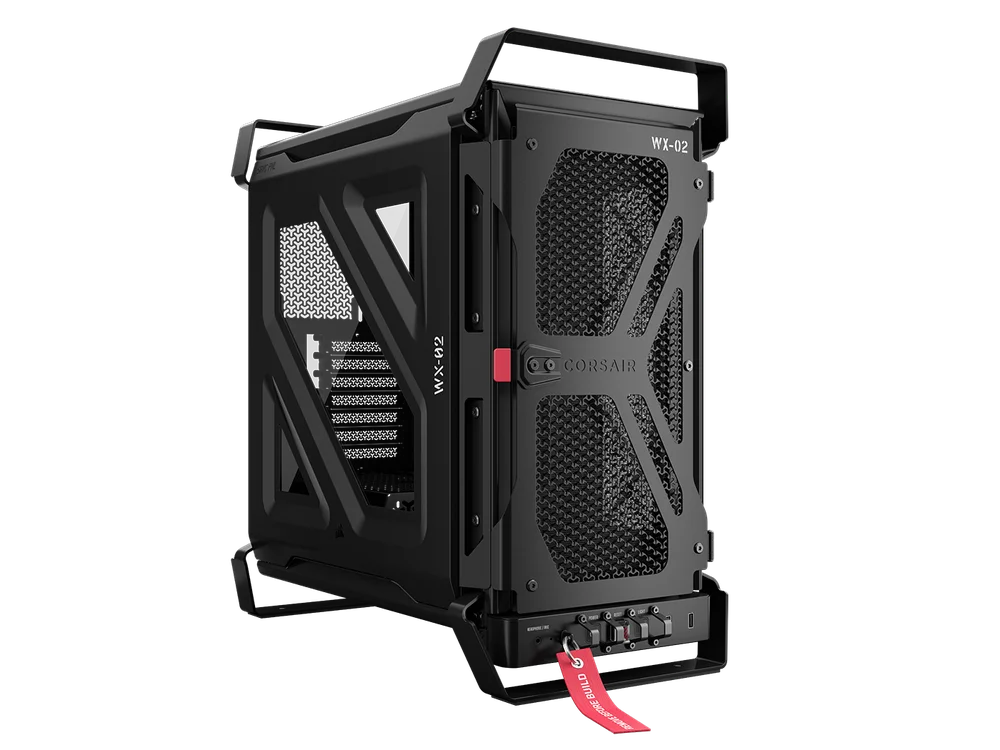
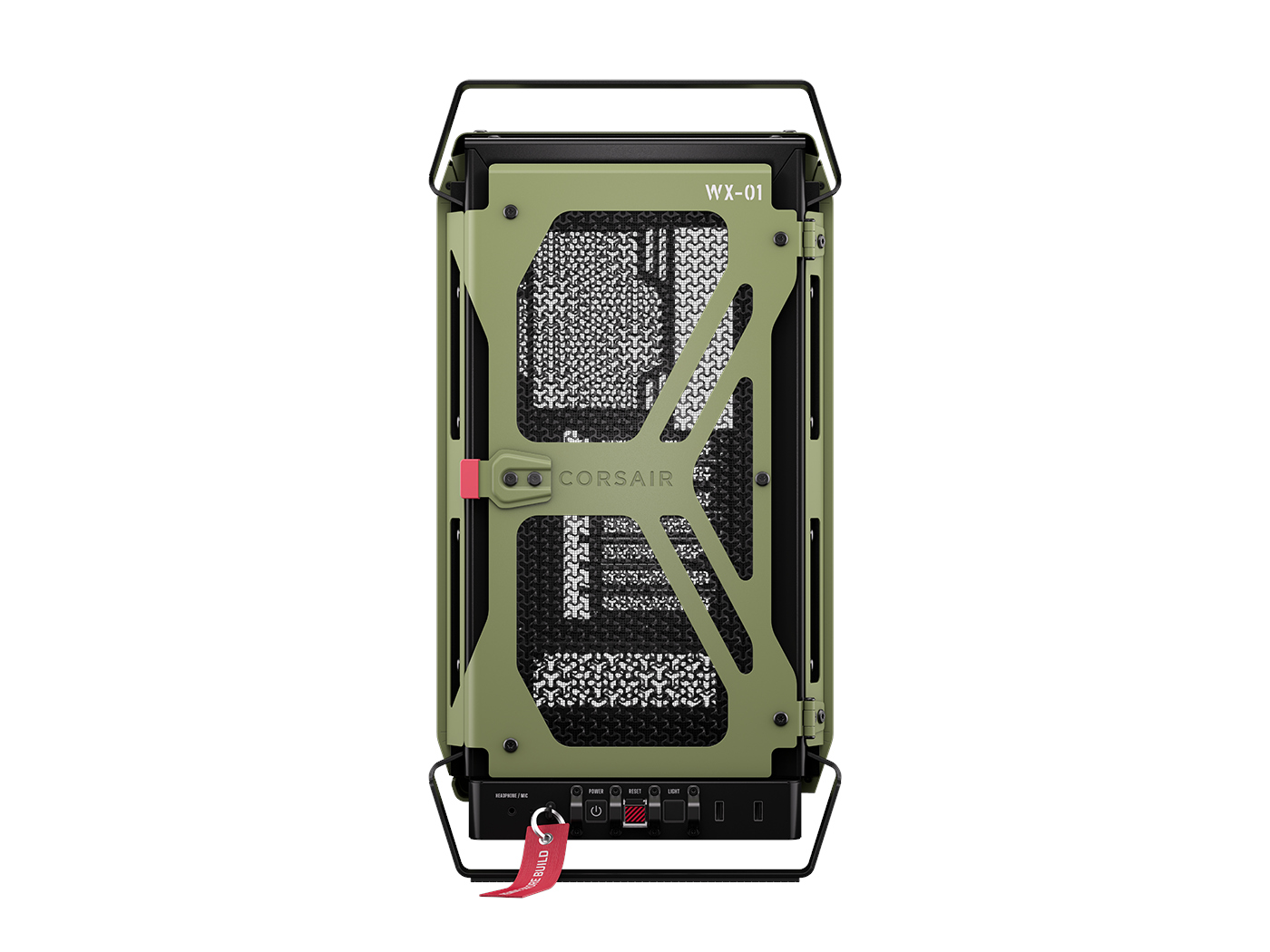
Corsair announced the Warthog this week, and yes, it is exactly what the name promises: a PC case styled after the M12 Force Application Vehicle from Halo, complete with an angular front panel that riffs on the classic Corsair Vengeance C70 rather than inventing a new shape from scratch. It comes in black or olive drab, ships for $179 in standard trim or $199 as the RS variant with three fans pre-installed. Cosmetics aside, the vent geometry is where this case earns its keep, and that is what I actually care about.
The Fan Math Is the Story
Strip away the military paint job and look at the mounting points: up to thirteen 120mm fans, or seven 140mm units, or two 200mm intakes, depending on how you configure it. The RS variant defaults to dual 200mm front intakes paired with a single 120mm rear exhaust, which is a sensible baseline for anyone who doesn't want to spend an afternoon tuning fan curves. Thirteen 120mm mounts is a genuinely high number for a case at this price point, and it tells me Corsair built the shell around a fully perforated front panel and large vents on the top, rear, and side panels rather than treating airflow as an afterthought behind a mesh sticker.
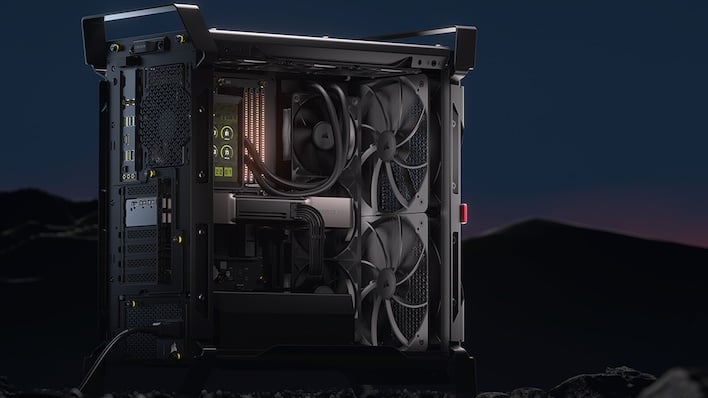
Radiator support tops out at 360mm with room for five additional 140mm fans elsewhere in the case, which covers triple-fan AIOs and custom loops without anyone needing to pull the motherboard tray to fit a pump. Max CPU air cooler height is 190mm, which rules out the largest dual-tower coolers on the market but comfortably covers most Noctua NH-D15-class units. GPU clearance sits at 405mm, enough for the longest RTX 5090 cards currently shipping.
Where the Vents Actually Matter
Airflow is not optional, it's physics, and a perforated front panel with triple bottom fan mounts means Corsair is pulling intake from more than one plane instead of relying on a single front wall of mesh fighting a GPU shroud for the same air. The illuminated rear I/O panel is a gimmick I don't need, but the protective bollards around the front USB-C and USB-A ports are the kind of detail that suggests someone on the design team has actually knocked a case around a desk before.
Storage is minimal by design: two 2.5" bays and a single 3.5" bay, which fits the case's clear target audience of gaming builds rather than NAS duty. Corsair is leaning on 3D-printable accessory compatibility to let owners add their own mounts, which is a reasonable way to keep the base chassis simple without locking out people who want more drive space.
What's Missing From the Announcement
No third-party thermal or acoustic testing exists yet since this is a preorder announcement, not a review unit in hand. I'm not going to pretend I have delta-T numbers or dBA readings for a case I haven't put a thermal camera on. What the spec sheet does tell me is that Corsair prioritized total vent area and fan count over the trend of sealed, RGB-heavy panels that look good in product photos and choke airflow in practice. A 200mm max PSU length also means most ATX 3.1 units, including the higher-wattage Titanium-rated units with beefier capacitor stacks, should clear the compartment without a fight.
The Real Test Comes Later
The fan mount count and radiator support numbers put the Warthog in the same conversation as other high-airflow mid-towers at this price, and the military styling is either going to sell units to Halo fans or turn away anyone who wants their desk to look like an office rather than a barracks. Either way, once review units land, the numbers that matter are static pressure at the intake, fan noise at idle and load, and whether that illuminated rear panel adds any measurable heat of its own. Until then, this is a promising spec sheet wearing a costume.
Loading comments...