
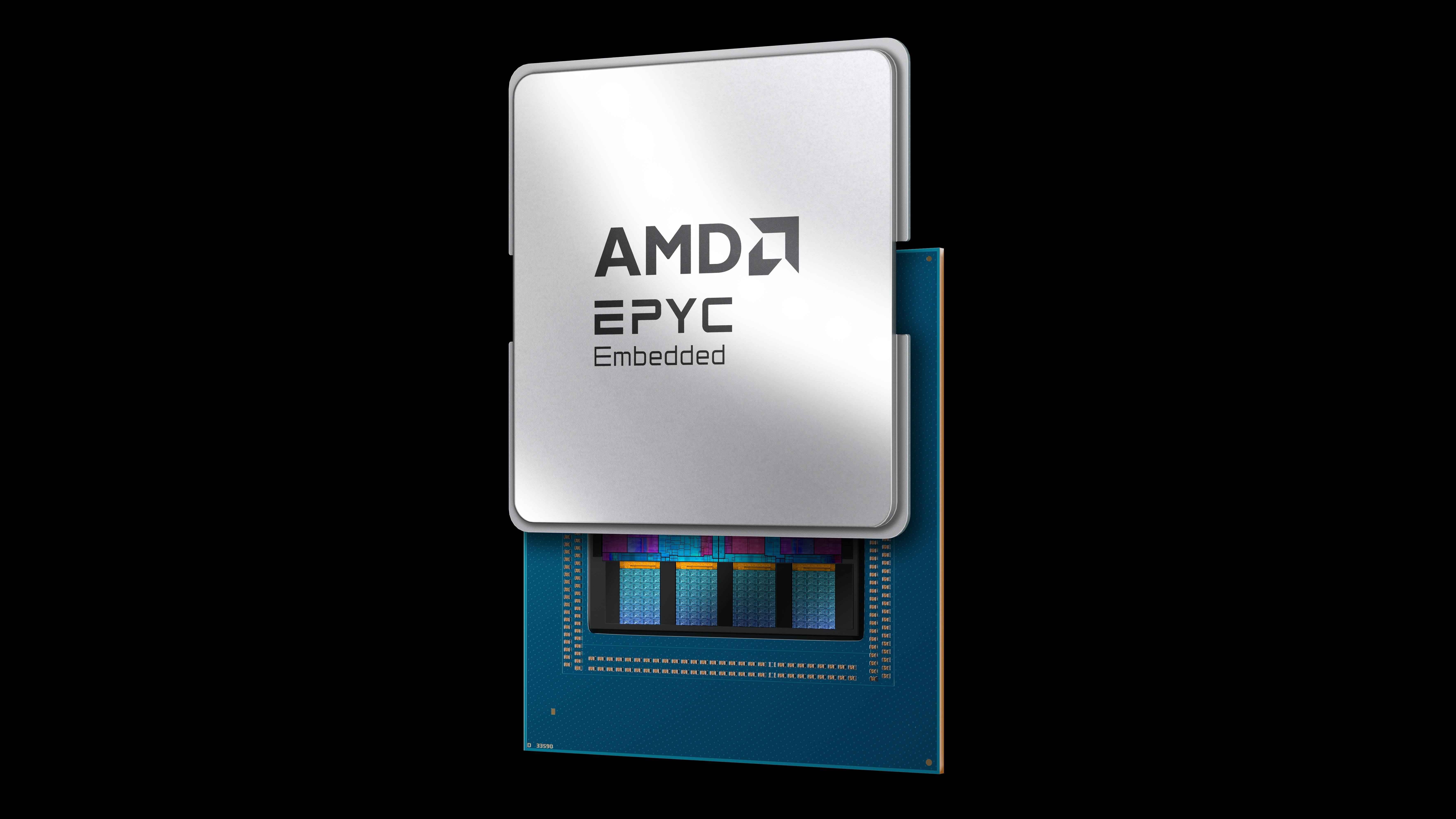
Embedded Gets a Bigger Compute Budget
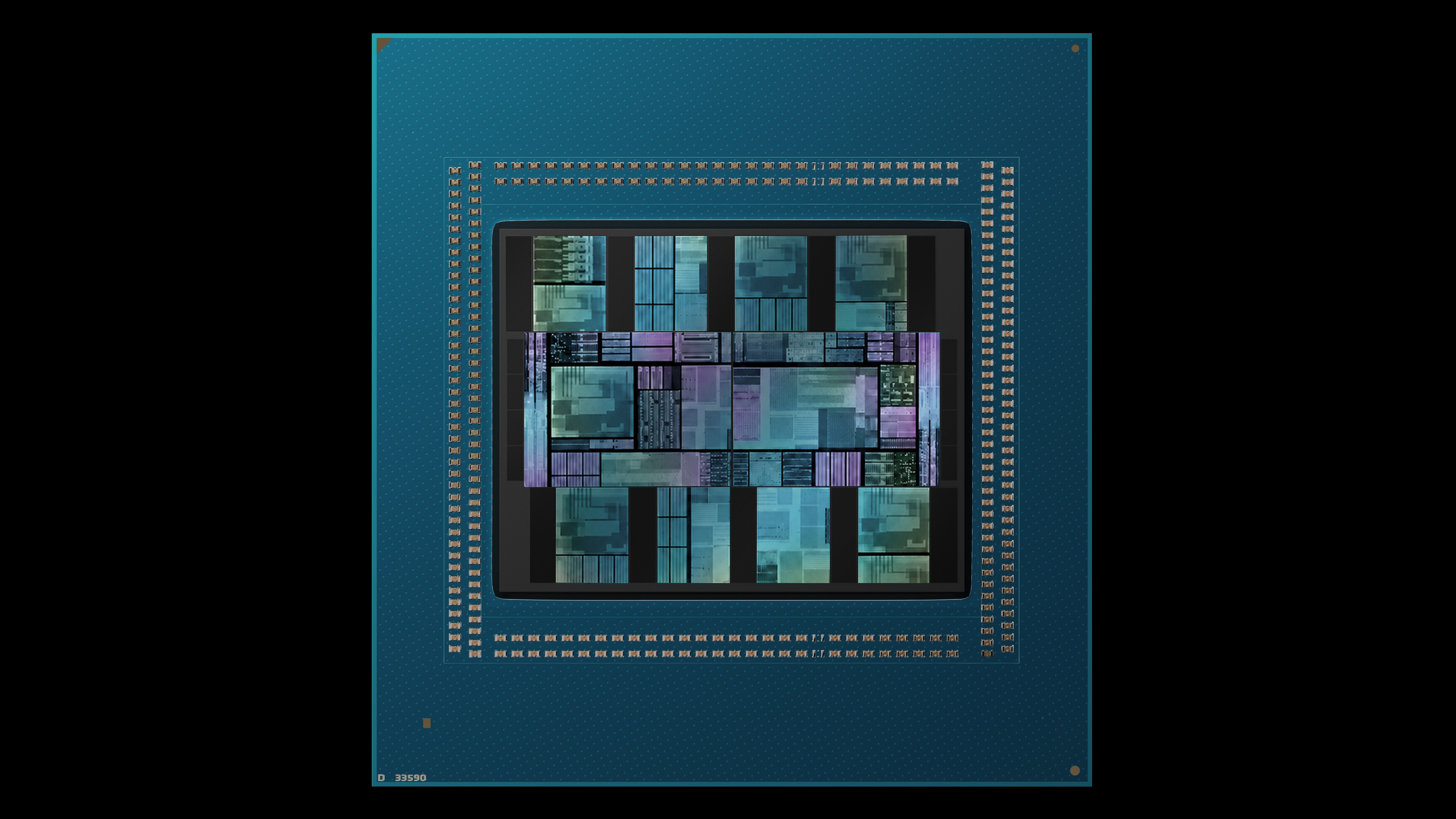
AMD announced EPYC Embedded 9006 on November 10, extending Zen 6 into infrastructure appliances. [AMD's announcement](https://newsroom.amd.com/news/2026-in-depth-embedded-epyc-venice/) specifies seven-year product longevity. That commitment deserves attention: replacing an appliance platform can require extensive validation, making continuity a purchasing consideration alongside performance.
Read the Throughput Footnote
AMD supplies an estimated SPECrate2017_int_base score of 4,900 for a dual EPYC 9976 configuration, versus a measured 2,740 for dual EPYC 9965 processors. The accompanying chart reproduces those figures. They are vendor-provided results, with the newer result explicitly an estimate, rather than independent testing.
The comparison also moves from 384 to 512 total cores, changes memory from DDR5-6400 to MRDIMM-12800, and changes the compiler from AOCC 5.0 to 6.0. Treating the score increase as an IPC measurement would be a mistake. Aggregate throughput captures the entire configuration; it cannot isolate architectural gains or establish single-thread performance.
Feeding the Workers
The platform specifications provide a more useful starting point for evaluating an appliance design than the headline multiplier alone. More execution resources help only when the application can supply enough independent work. Storage processing can encounter memory limits, while packet processing can depend heavily on queue placement and synchronization. Buyers need measurements using their actual software and traffic patterns before translating compute capacity into appliance throughput.
Longevity Needs a System Around It
My reading is that the embedded positioning matters most to teams maintaining validated hardware over long deployments. A processor longevity commitment helps planning, but the motherboard, firmware and peripheral suppliers must support the same lifecycle. The engineering question is whether the complete appliance remains maintainable, including replacement parts and reproducible software builds.
What Buyers Should Measure
An evaluation should separate sustained throughput from latency under load, then measure wall power at the required service level. Neither a core count nor a throughput score establishes energy efficiency. For this launch, the responsible conclusion is narrower: AMD has announced a substantial embedded platform update, while application testing must determine how much of its capacity becomes useful work.
Loading comments...