
Four Tiers, Zero Bargains
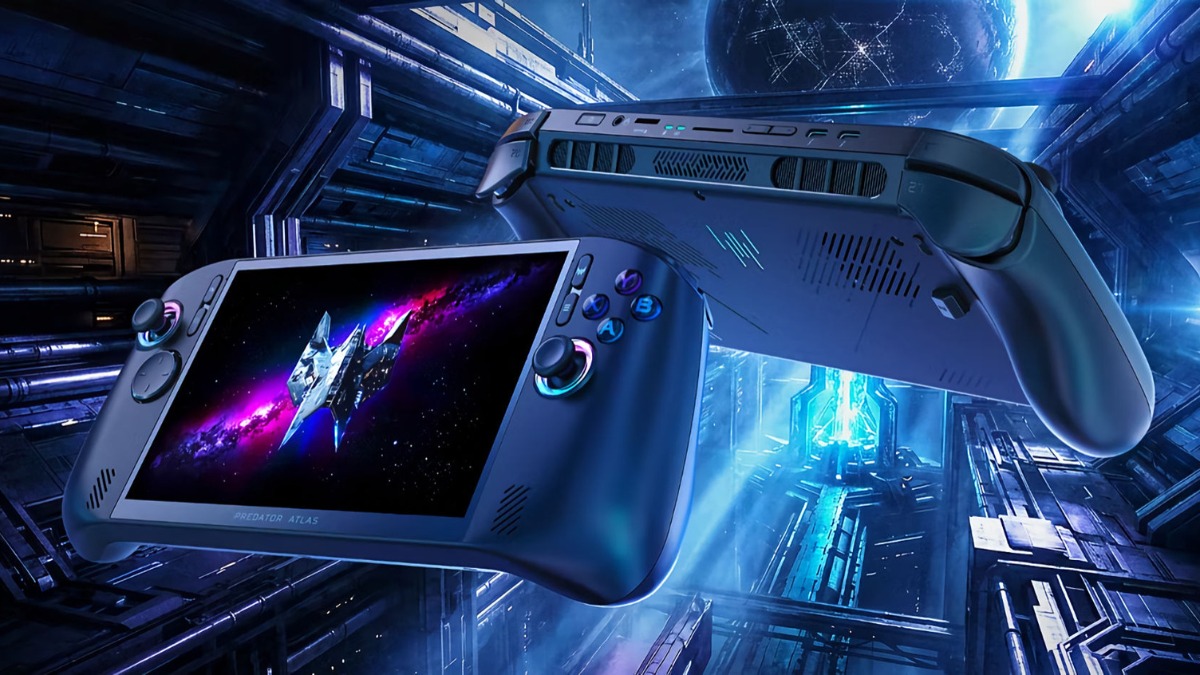
Acer has confirmed pricing for the Predator Atlas 8, and there's no way to spin this softly: the cheapest configuration is £999.99, and the range tops out at £1,499.99 for the 32GB Extreme model with the 80Whr battery. WCCFtech's US read on the same lineup puts the base unit at roughly $1,340 and the top Extreme configuration at $1,742. Whichever currency you're counting in, every single tier clears the price of a Steam Deck OLED and a ROG Ally X combined. This is the first mainstream Windows handheld to treat $1,300 as an entry price rather than a flagship ceiling.
The hardware explains some of it. Acer paired Intel's new Arc G3 and Arc G3 Extreme handheld silicon, first shown at Computex back in June, with an 8-inch WUXGA panel running 120Hz with VRR, 500 nits brightness, and Gorilla Glass Victus on top. That's a genuinely nice screen, bigger than the Steam Deck OLED's 7.4-inch panel and brighter than most of what ships in this class. Dual Thunderbolt 4 ports mean proper eGPU and dock support without the bandwidth compromises Steam Deck owners have lived with since 2022. The Arc G3 Extreme variant runs 14 cores and Arc B390 graphics with ray tracing and XeSS 3 upscaling, which on paper puts it ahead of the RDNA-based Z2 Extreme silicon in AMD's handhelds for anything that actually leans on hardware ray tracing.
Where the Money Actually Went
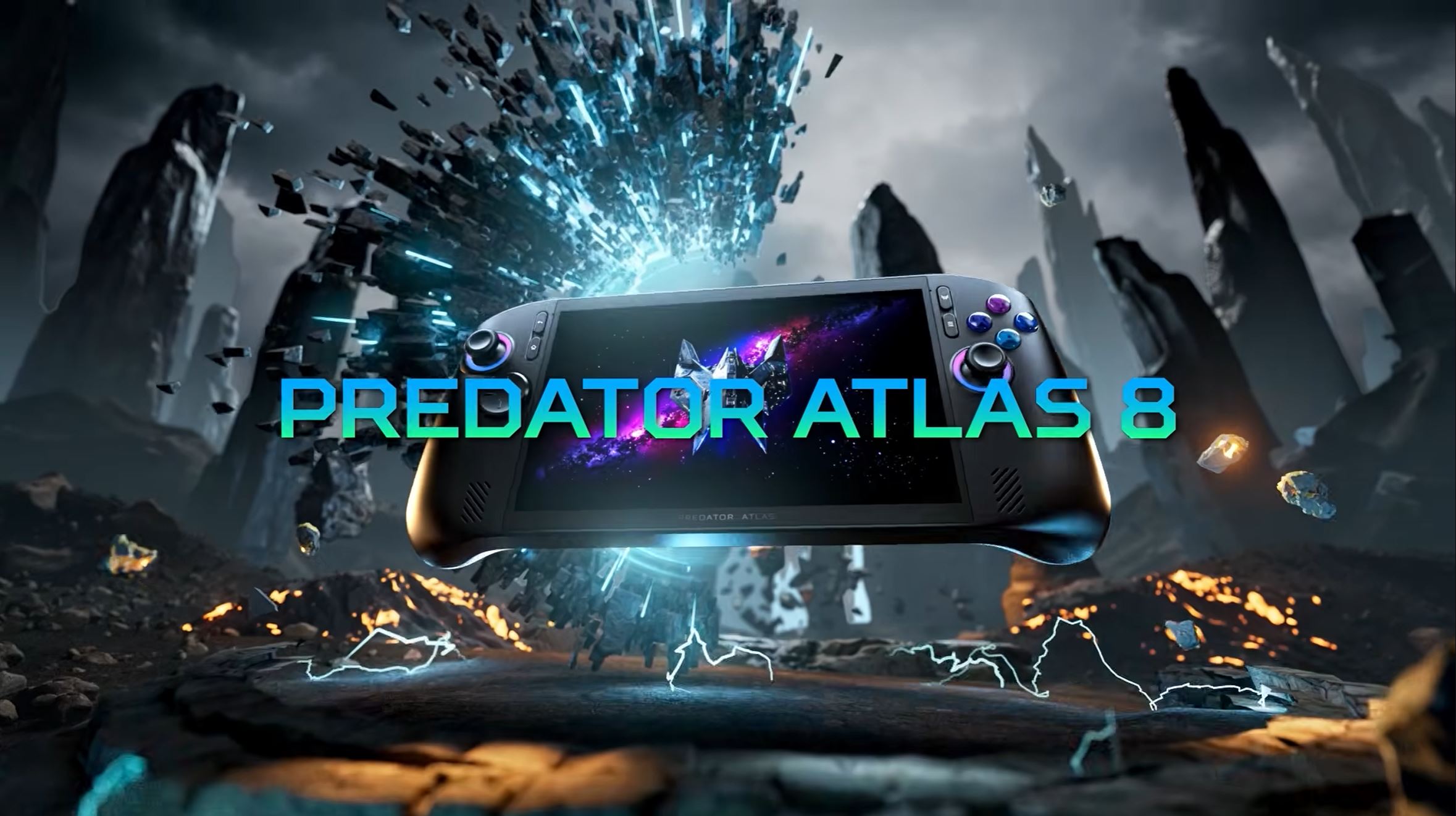
The battery capacity split tells you where Acer is drawing the line between the base and Extreme SKUs. Both 16GB and 24GB base models get a 60Whr cell, while both Extreme configurations jump to 80Whr, the same capacity as the ROG Ally X and MSI Claw 8 AI+. That's not a coincidence. Arc G3 Extreme runs hotter and draws more sustained power than the standard Arc G3, so Acer had to spend the extra 20Whr just to keep runtime in the same neighborhood as the competition, not to leapfrog it. Weight moves accordingly too: 770g on the 60Whr models versus 810g on the 80Whr Extreme, which puts the top-tier Atlas 8 solidly into 'you will feel this in your hands after an hour' territory, heavier than a Steam Deck OLED's 640g by a wide margin.
Emulation and TDP: The Real Question Nobody's Answered Yet
Here's what I actually care about and what none of the pricing coverage has touched: nobody has TDP-tuning numbers for Arc G3 in the wild yet. AMD's Z-series chips have three generations of community-documented TDP curves at this point, you can find the sweet spot for RPCS3, Xenia, or Ryujinx on a Z2 Extreme in about five minutes of forum searching. Intel's Arc G3 is a blank slate. Driver maturity for handheld-scale power gating is the single biggest unknown here, and Intel's discrete Arc GPU driver history on desktop has been rocky enough that I'm not assuming XeSS 3 and ray tracing headroom translate cleanly into stable low-TDP emulation performance. Windows-only also means no SteamOS shortcut the way Lenovo gave Legion Go 2 buyers, so whatever driver overhead exists, you're carrying all of it.
How It Stacks Up
Against the field, the Atlas 8's pricing looks less like aggressive positioning and more like Acer accepting that Arc G3 Extreme silicon and 8-inch 120Hz panels cost what they cost right now, DRAM crisis included. The Steam Deck OLED sits at $789 for 512GB and $949 for 1TB after Valve's May price hike. The ROG Ally X 24GB runs $799.99. MSI's Claw 8 EX AI+, the closest direct competitor since it also runs Arc G3 Extreme, launched around $1,799, meaning Acer actually undercuts MSI's equivalent tier by roughly $60 rather than matching it stride for stride. That's the real story buried under the sticker shock headlines: Atlas 8 isn't the most expensive Arc G3 Extreme handheld on the market, it's just the newest one to confirm it isn't going to be cheap either.
Worth Buying Sight Unseen? No.
October launch, full Windows, Xbox Game Pass bundled in for two months on pre-orders. If you already own a Steam Deck or ROG Ally and your library runs fine on AMD silicon, there's no reason to jump yet. Wait for review units and actual sustained-TDP benchmarks before anyone spends $1,340 minimum on a chip family with zero handheld driver track record. The screen and Thunderbolt 4 ports are legitimately compelling on paper. Whether Arc G3 can hold a stable frame pace at 15W in the games people actually take on the road is the only number that matters, and right now, nobody outside Acer's lab has it.
If it fits in my hands and runs games, I'm interested, but I'm not pre-ordering a driver stack I've never tuned.
Loading comments...